Trauerarbeit
The movement dimension is central to the piece. Drawing on training at the Tamalpa Institute in movement-based expressive arts therapy, I performed in front of the paintings and filmed that performance on 16mm in double exposure. The body does not illustrate the paintings — it inhabits and dissolves into them. The resulting footage is layered and haunting: the physical and psychological made inseparable, the grain and resistance of the film stock mirroring grief’s own refusal to resolve cleanly or on schedule.
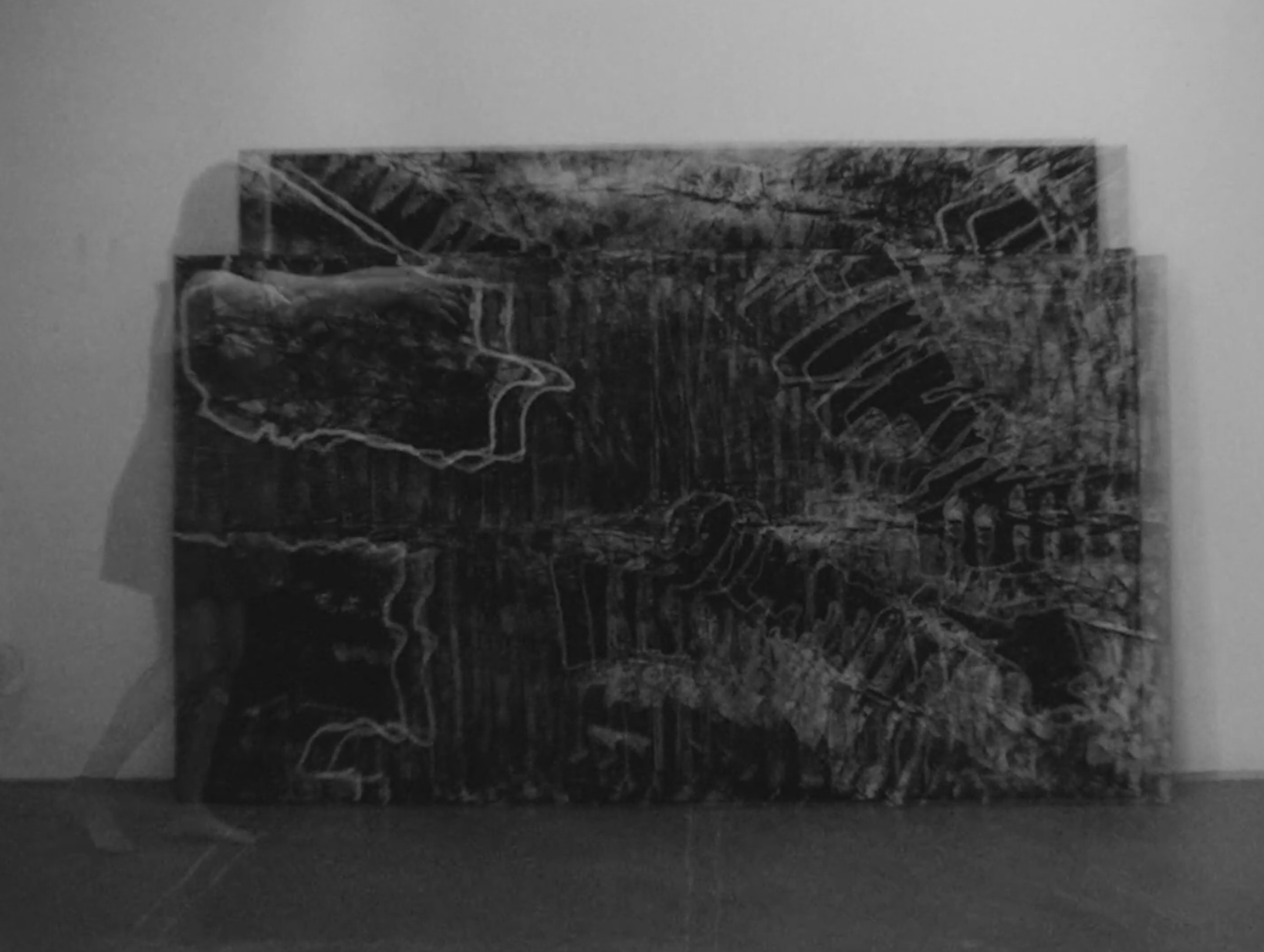
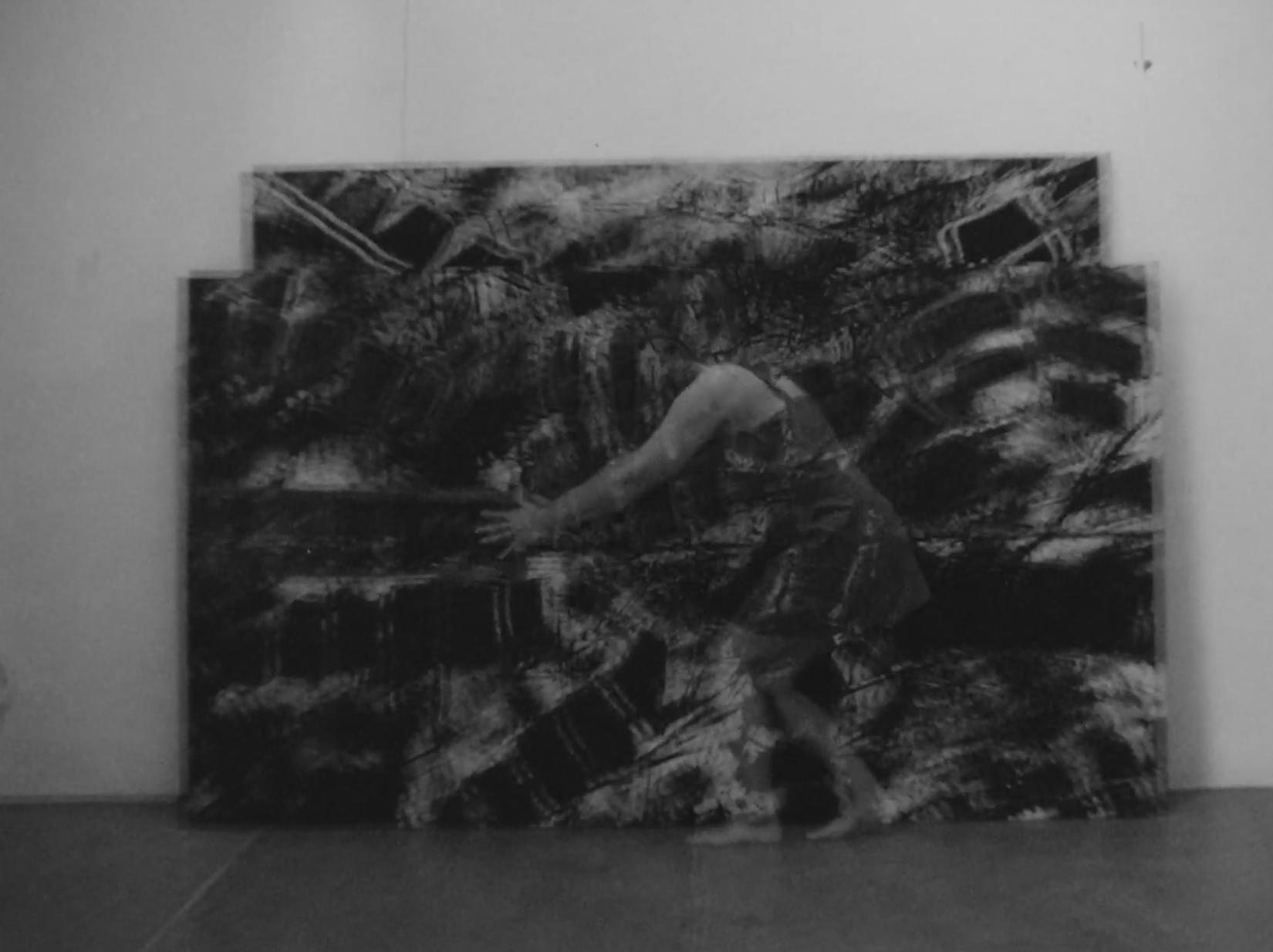
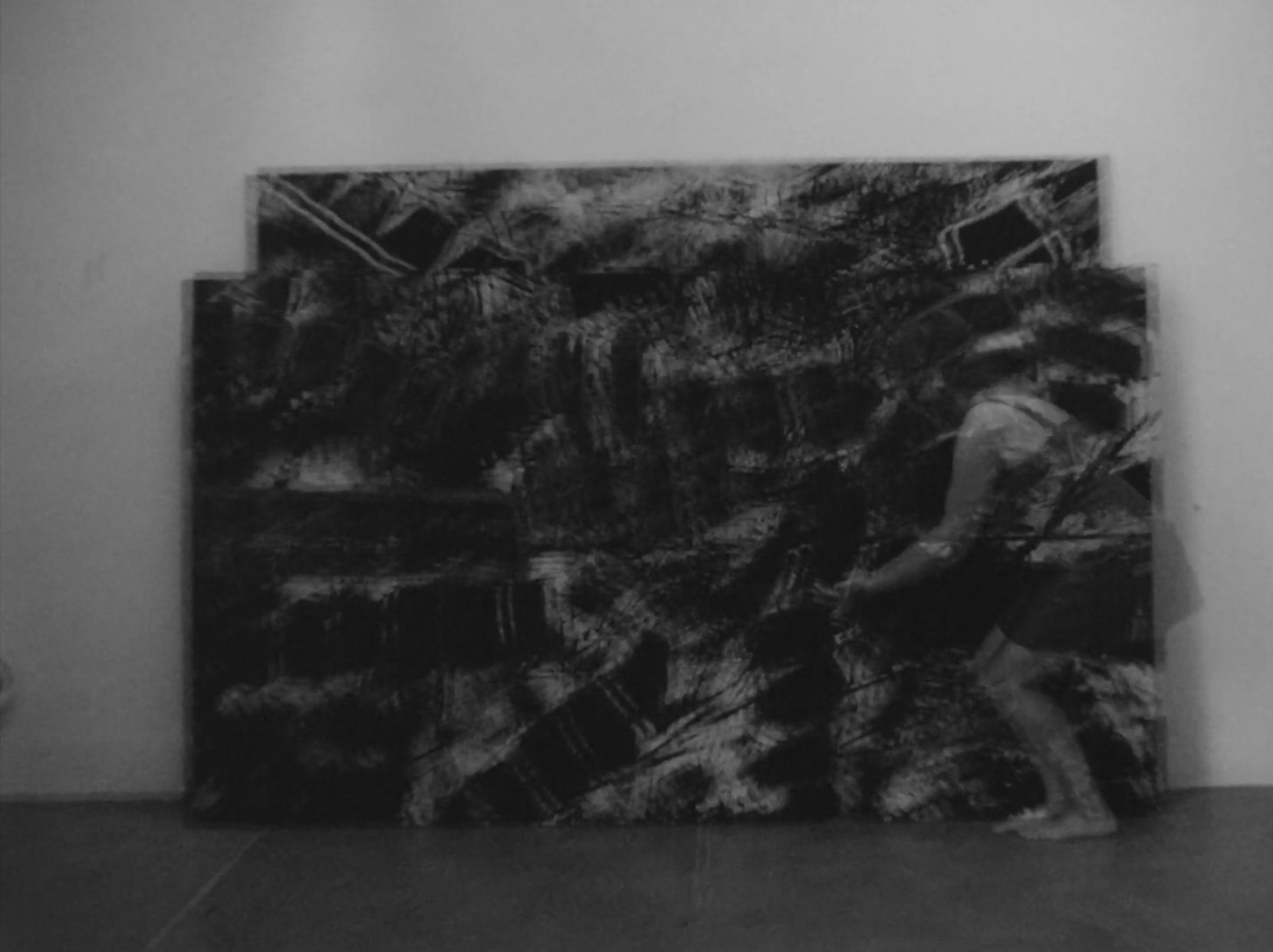
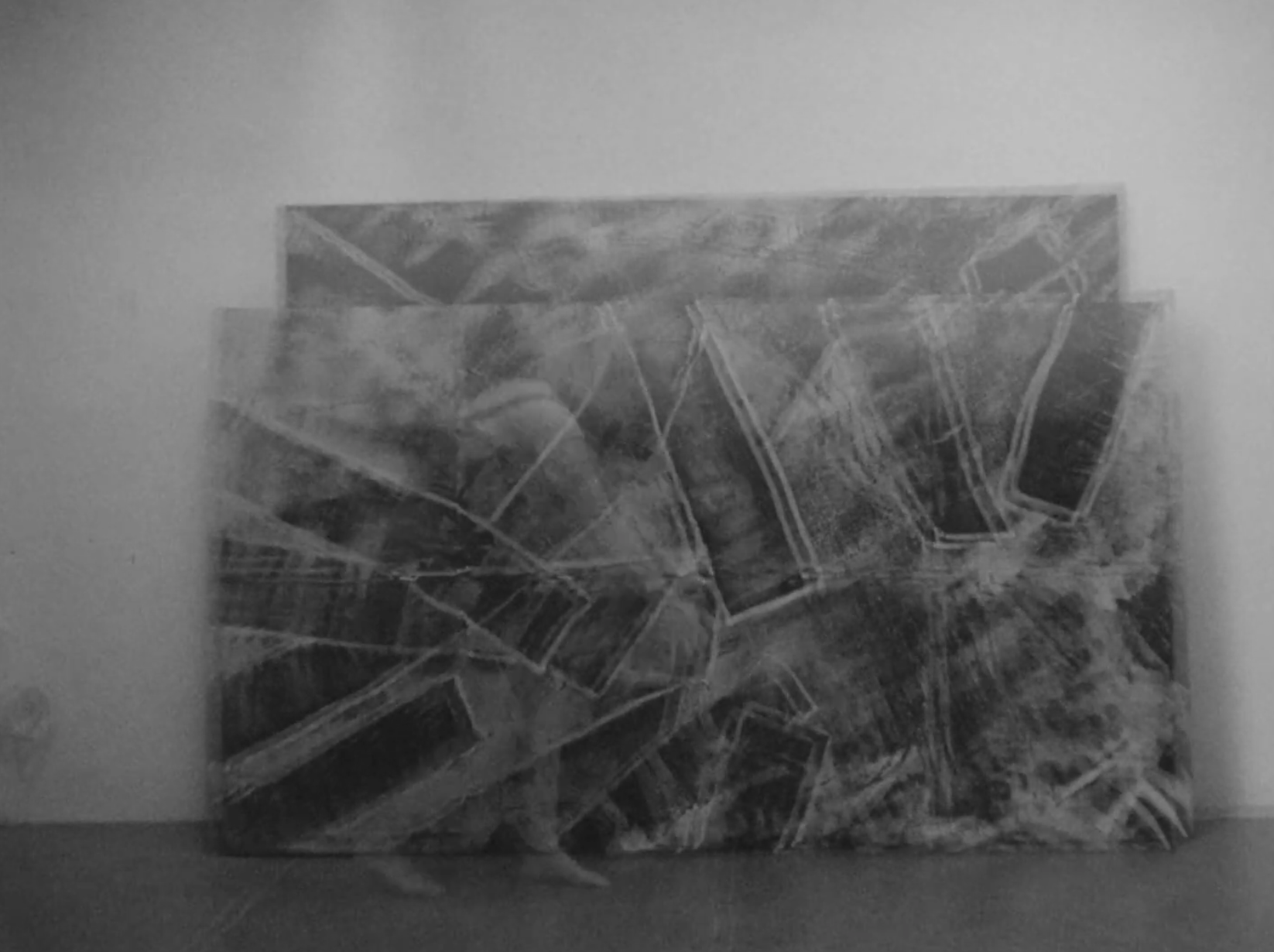
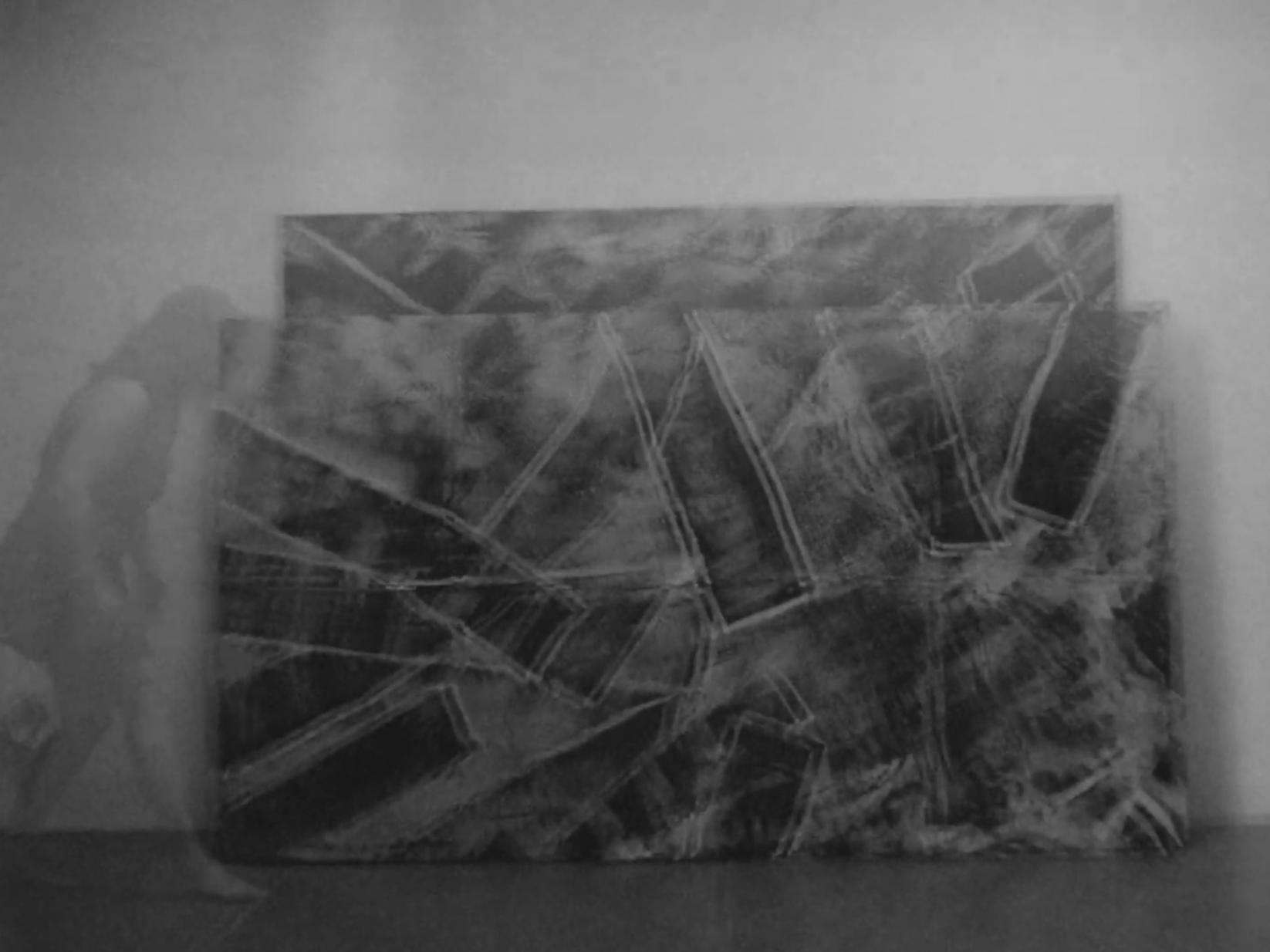
This movement-based performance approach is grounded in a broader practice that treats painting, performance, and film not as separate disciplines but as stations in a single continuous process of transformation. Training as a clinical psychologist and movement-based expressive arts therapist is not a backdrop to this work but its structural foundation — psychotherapeutic frameworks shape not only the concept but the method: the body as primary material, and meaning trusted to emerge in the collision between forms.
Installed in sequence, Trauerarbeit invites viewers to walk the arc of grief physically, moving from canvas to canvas the way a person moves through mourning itself — unevenly, without a straight line, sometimes doubling back. The 16mm film screens on a continuous loop within the installation, its projected light and the performer’s gestures animating the paintings’ surfaces, so that the static and the moving image inform each other in real time.
The work resists a tidy resolution by design. Grief is not depicted here as a problem to be solved or a wound that closes cleanly — it is treated as a bodily, time-based process, something lived through rather than gotten over. The six stages are not steps on a ladder but weather systems the body passes through, each one real and necessary, none of them permanent.
Trauerarbeit has been developed as part of an ongoing practice exploring the body as a site of psychological and emotional transformation — work that draws equally on formal training in clinical psychology and psychodrama and on years of studio practice across painting, performance, video, and sound. The piece continues a through-line found throughout this body of work: an interest in what the body knows before language catches up, and in art as a space where that knowledge can be witnessed rather than explained away.
![01 Trauerarbeit [Schock] LR](https://mariatheresabarbist.com/wp-content/uploads/2026/02/01-Trauerarbeit-Schock-LR.jpg "01 Trauerarbeit [Schock] LR")
![02 Trauerarbeit [Verleugnung] LR](https://mariatheresabarbist.com/wp-content/uploads/2026/02/02-Trauerarbeit-Verleugnung-LR.jpg "02 Trauerarbeit [Verleugnung] LR")
![03 Trauerarbeit [Wut] LR](https://mariatheresabarbist.com/wp-content/uploads/2026/02/03-Trauerarbeit-Wut-LR.jpg "03 Trauerarbeit [Wut] LR")
![04 Trauerarbeit [Verhandeln] LR](https://mariatheresabarbist.com/wp-content/uploads/2026/02/04-Trauerarbeit-Verhandeln-LR.jpg "04 Trauerarbeit [Verhandeln] LR")
![05 Trauerarbeit [Depression] LR](https://mariatheresabarbist.com/wp-content/uploads/2026/02/05-Trauerarbeit-Depression-LR.jpg "05 Trauerarbeit [Depression] LR")
![06 Trauerarbeit [Akzeptanz] LR](https://mariatheresabarbist.com/wp-content/uploads/2026/02/06-Trauerarbeit-Akzeptanz-LR.jpg "06 Trauerarbeit [Akzeptanz] LR")